A rental proposal can be technically detailed and still leave important questions unanswered. Processor names, graphics cards and refresh rates describe components, not the delivered playing experience. Your comparison should connect each specification to a required outcome, a test method and a responsible person. Only then can two differently worded offers be assessed on the same basis.
Begin with the completed station dependency record. Separate mandatory requirements from preferences. A matching display model may be essential for competitive consistency, while a particular case finish probably is not. Explain why each mandatory item matters so a provider can flag a genuine incompatibility instead of silently substituting something that appears similar.
Define performance through a workload
A frame-rate claim needs context: game version, resolution, graphics settings, map or scenario, duration and any background tasks. NVIDIA GeForce RTX and AMD Radeon product families contain many different configurations. A family label alone is not enough to predict performance. CPU behaviour, cooling, memory arrangement and power settings can change the result even when the graphics card name matches.
Ask for the exact delivered component configuration and a representative test. Where practical, examine frame-time consistency rather than only an average frame rate. Document whether recording, streaming or observer software will run on player systems. If production duties share a machine, test the combined workload instead of treating those duties as free capacity.
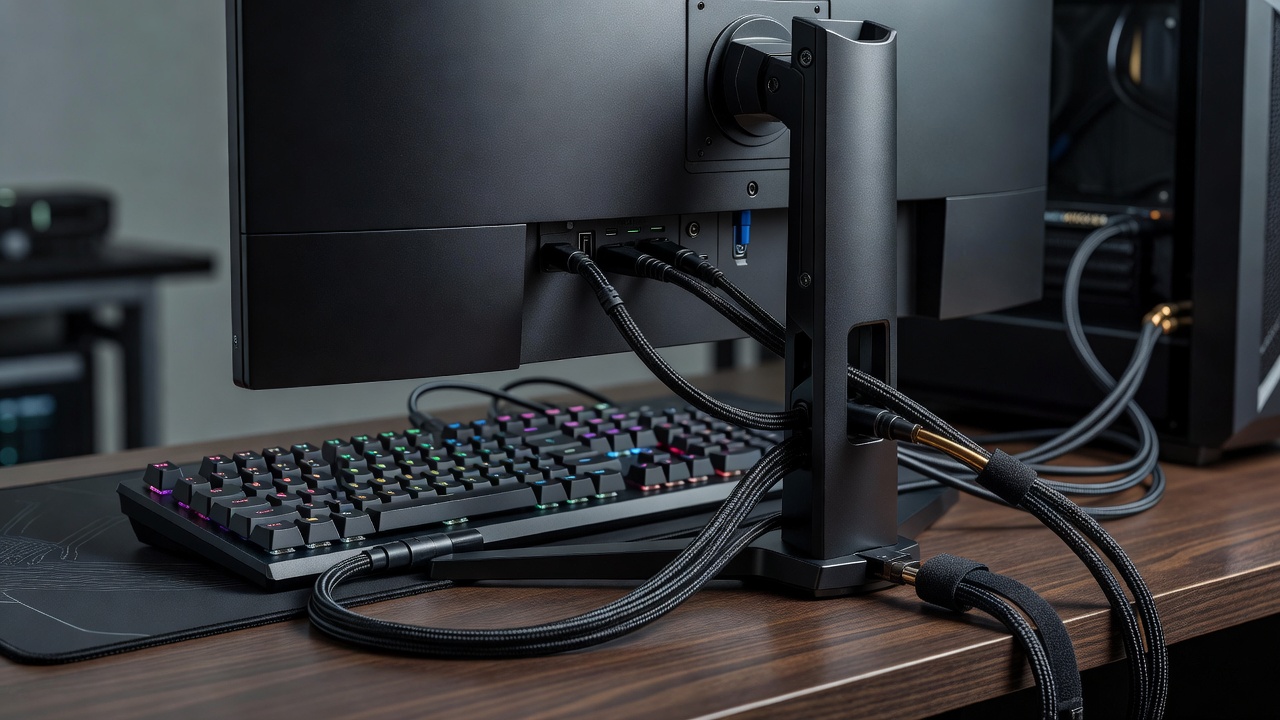
Verify the complete display path
A monitor’s advertised maximum refresh rate is not evidence that the assembled station is using it. The source output, display input, cable, selected resolution and software settings all participate. Check the actual mode in the operating system and on the display. Confirm whether the event rules allow adaptive sync, motion-blur reduction or other display features.
VESA Adaptive-Sync and HDMI functionality describe technical capabilities, but model-specific implementations still matter. Avoid assuming that an adapter preserves every refresh mode or audio feature. Record exact monitor models and approved cable arrangements. If a substitute is proposed, require validation of the whole path rather than accepting a comparison based solely on screen size.
| Headline claim | Useful evidence | Contract question |
|---|---|---|
| High performance | Repeatable game test on the delivered build | What happens if acceptance fails? |
| High refresh display | Model, input and verified operating mode | Which substitutions require approval? |
| Event support | Coverage hours and escalation route | Who authorises and performs a swap? |
| Complete package | Itemised accessories and exclusions | Who supplies omitted dependencies? |
Treat software as a specification
Specify the operating-system state, driver policy, launchers and required utilities. Steam, Epic Games Launcher and publisher-specific clients may require downloads, updates or authentication that affect the setup window. Confirm who prepares the image, who holds administrator access and whether restarting restores or removes local changes. Never assume that hardware rental includes game licences or permission to operate an event.
For audio, test the actual communication route. USB headsets and analogue headsets can behave differently when capture devices, voice software or production monitoring are added. If OBS Studio is part of the production workflow, describe where it runs and which audio endpoints it uses. Keep player audio, commentary and programme feeds distinct in the specification.
Compare responsibilities before totals
Check the rental period definition, delivery and collection windows, installation scope, support coverage and return inspection process. Determine when custody transfers and what evidence is used to assess damage or missing accessories. An apparently lower total may exclude setup labour, transport, out-of-hours access or support that another proposal includes.
Read substitution clauses carefully. Define which changes need written approval and how consistency across competing stations will be maintained. Ask whether replacement equipment is held at the venue or dispatched from elsewhere; these are different recovery models. A response target should state whether it refers to acknowledging a call, attending the venue or restoring a usable station.
Close the comparison with a decision record
Keep an exceptions list alongside the comparison. Record unanswered questions, accepted substitutions and the person who approved each deviation. Reissue the agreed specification as a dated attachment to the rental agreement where appropriate, so sales correspondence and delivery expectations do not drift apart.
Finally, walk through a failure: a display stops working during a match, a machine will not authenticate, or a collection vehicle arrives early. The agreement should make the next action understandable. If nobody can identify the owner, support route or acceptance evidence, the specification is not ready to become an operational plan.